Events

No upcoming events.
We do not run events for volume. We run them when there is something worth exploring together.
We do not run events for volume. We run them when there is something worth exploring together.
Past events
Events
Contact Us

Struggling to integrate Design Thinking? CONTRACT's workshop gives you tools and confidence to tackle everyday organisational challenges innovatively.
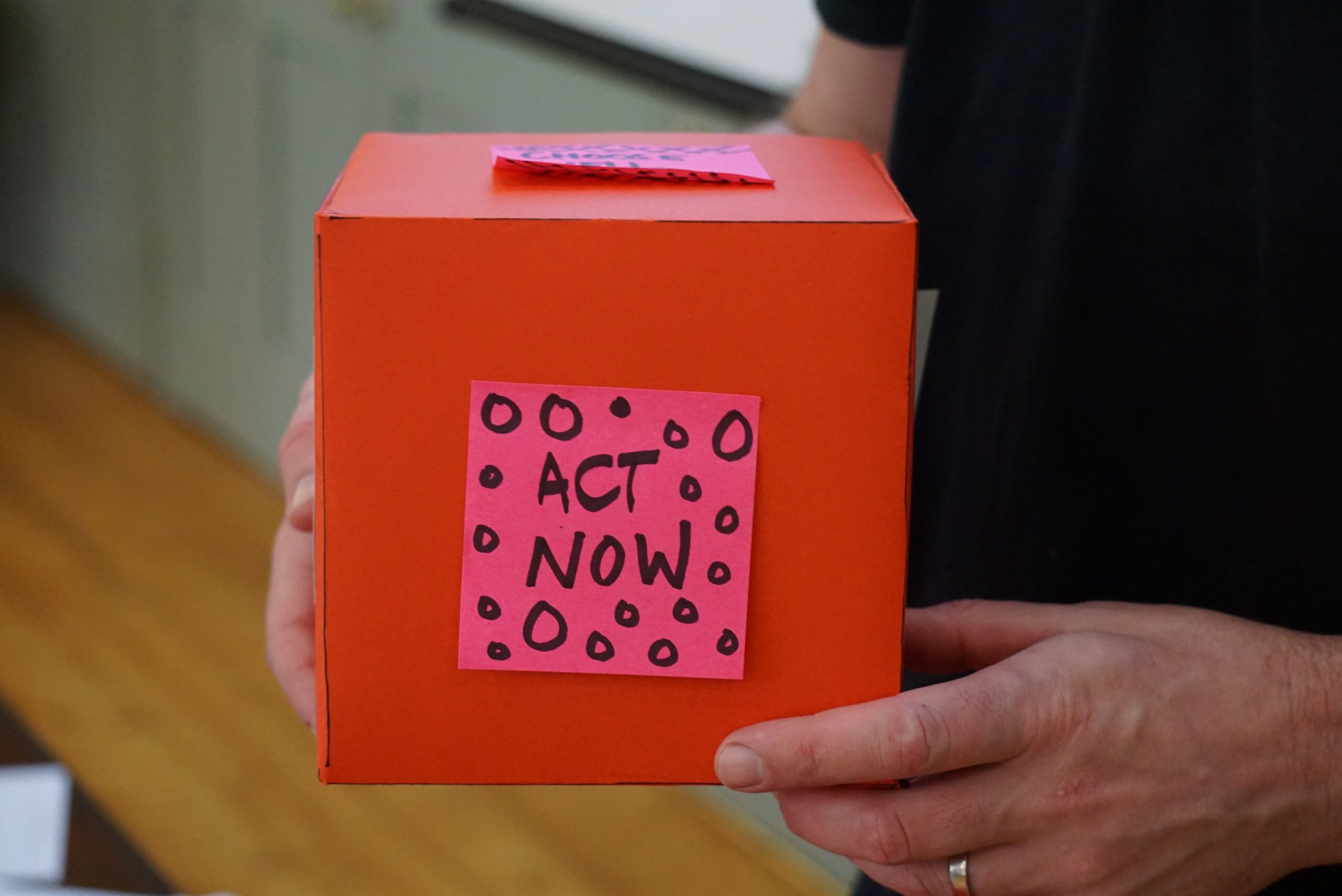
Are you going around in circles trying to design your first Design Thinking Workshop or do you need support? If you find it difficult to integrate Design Thinking methods into your team or organisation or if you need ideas, a Design Thinking Workshop can provide the required impact to support your team. No matter whether it is an extraordinary idea or an everyday challenge.
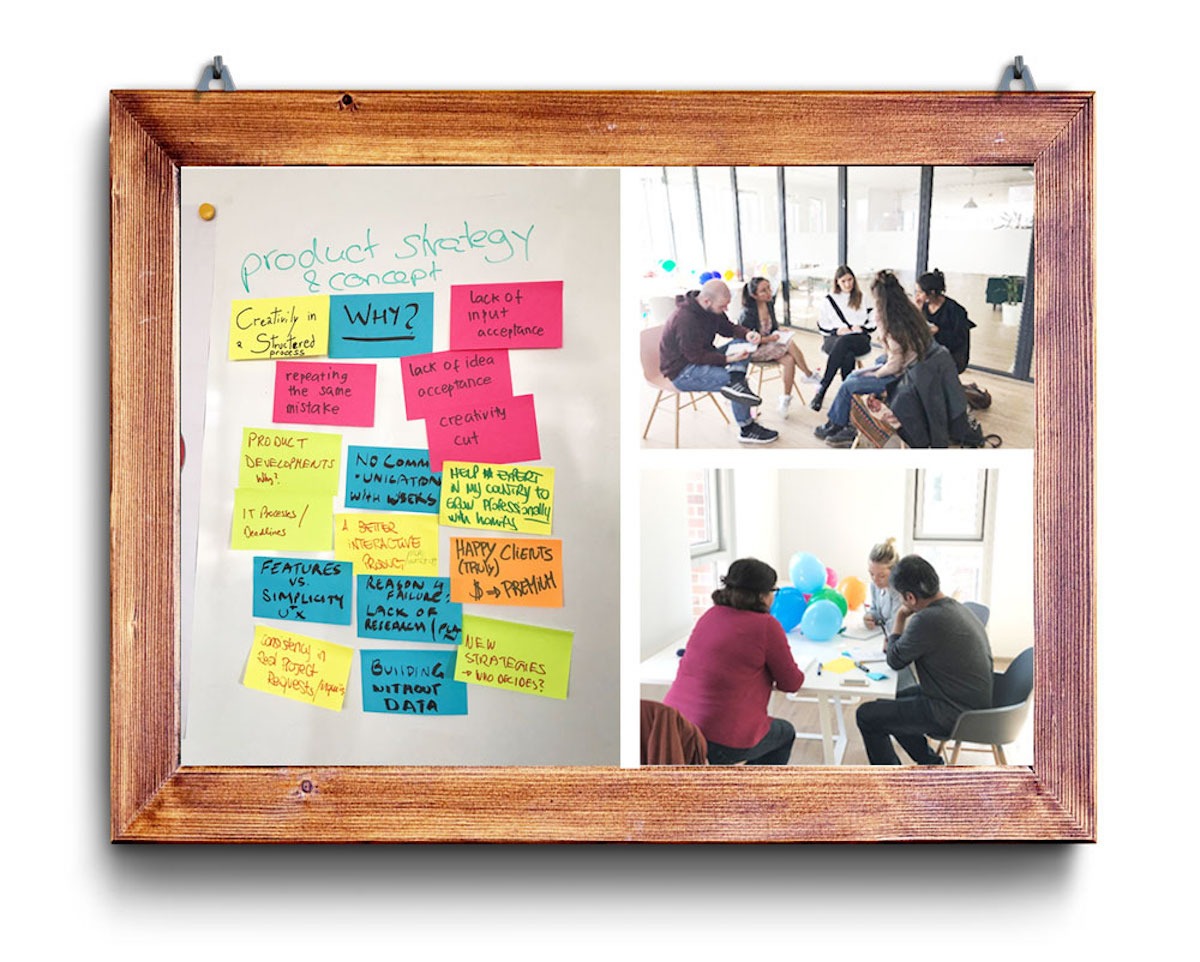
Design Thinking is an effective method to further develop processes, products andorganisations. Itis a co-created process that helps teams to innovate and solve complex problems. How? By developing ideas in a creative way that focus on the user of a problem, product or service.
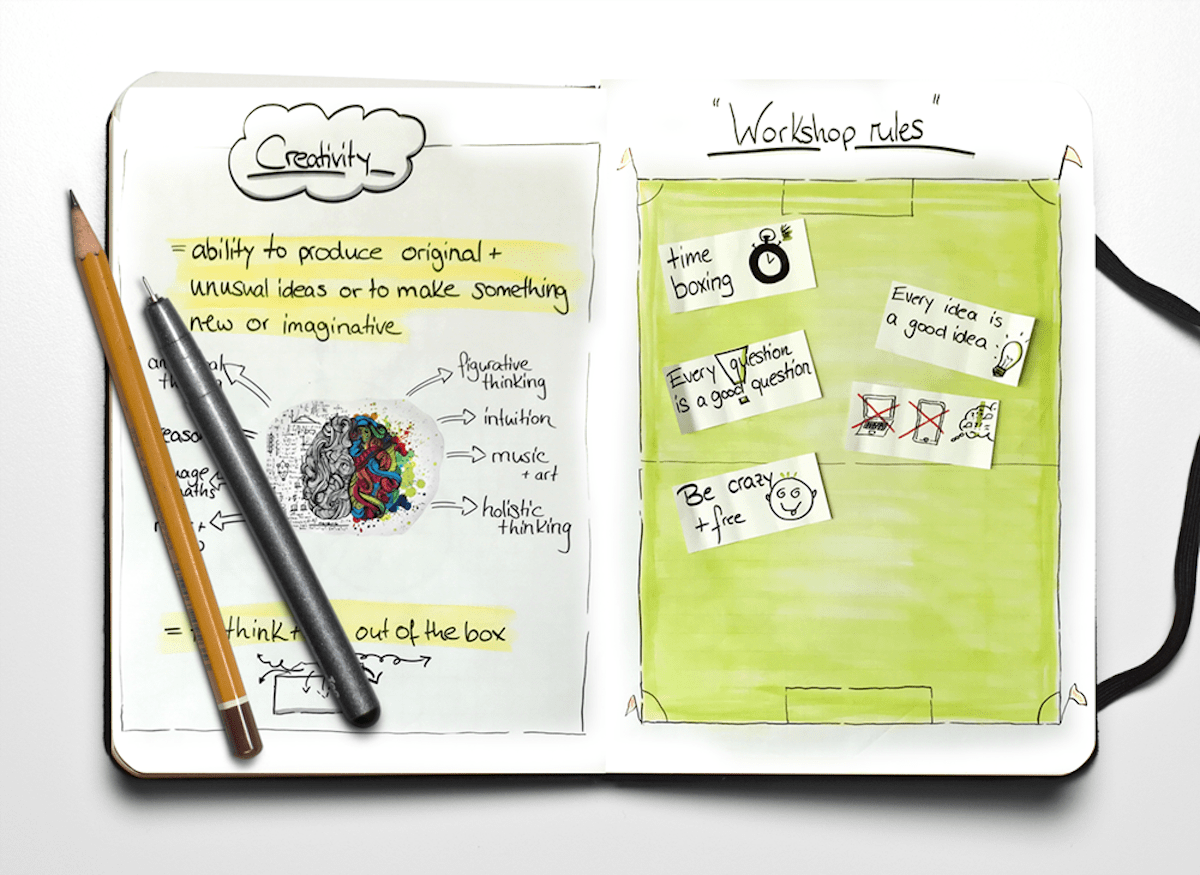
The rules of the game help to provide the necessary framework for the workshop. Creative results are achieved within a very short time and participants can concentrate on what is really important: the ideas! Time Boxing: There is a fixed time limit within which each specific task must be completed Ideas: Every idea is welcomed and must not be evaluated Questions: There are no stupid questions! On the contrary, every question enriches the design thinking process Free space: Creativity is desired and encouraged and can be based on unusual things. Analog materials: The method requires nothing more than a pen, paper and other materials that participants can get their hands on, such as Lego or balloons. All forms of digital media are taboo. Interactive Process: The phases are run through several times, if necessary, in order to always keep the user at the centre and to keep on improving the result.
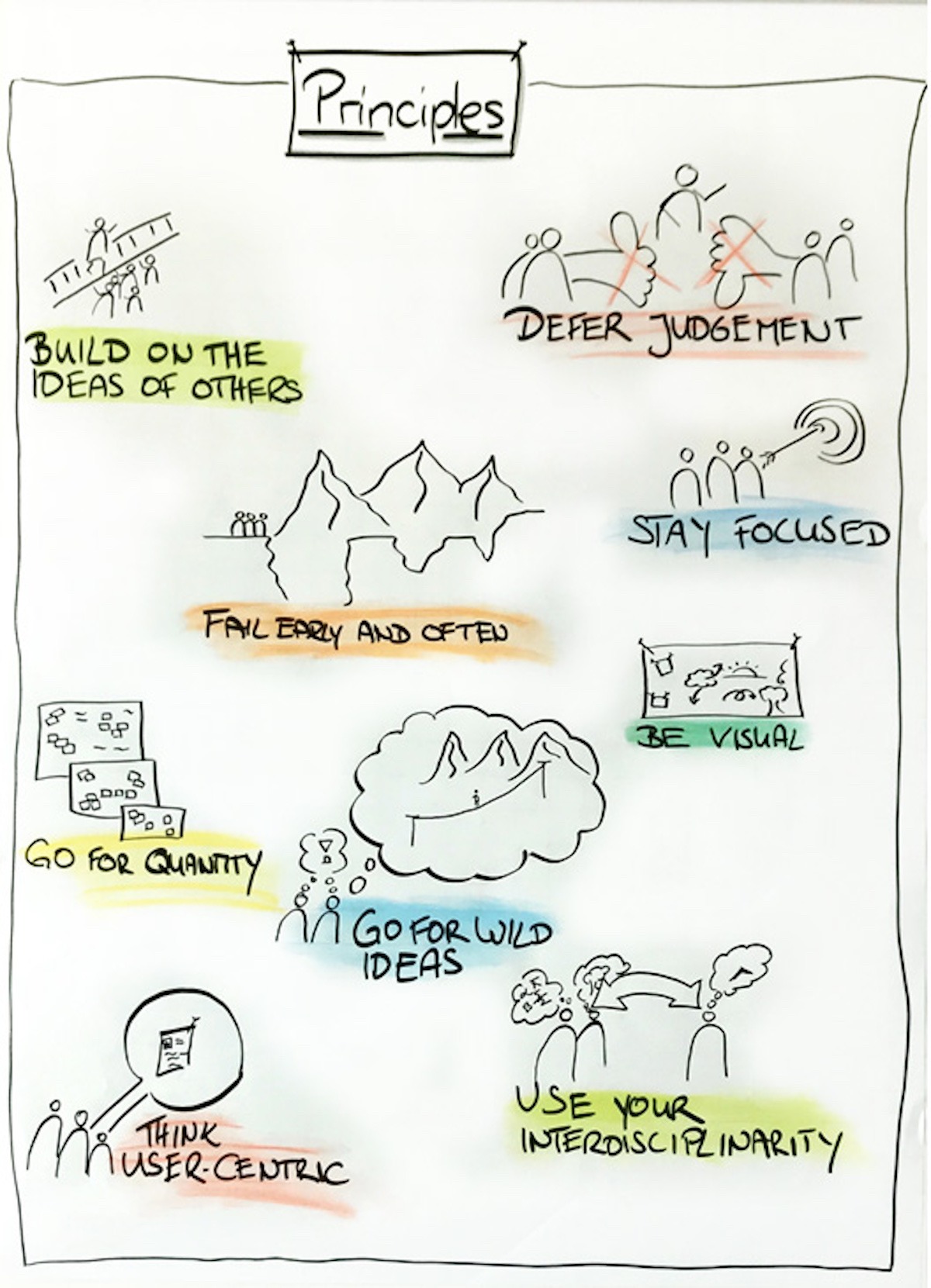
For Design Thinking to work well in a team, it helps to adhere to certain principles. Visualise the Design Thinking principles easily on a flipchart or print out the 'Design Thinking Principles Poster'. This ensures that all participants are aware of them. It helps them to approach things 'differently'.
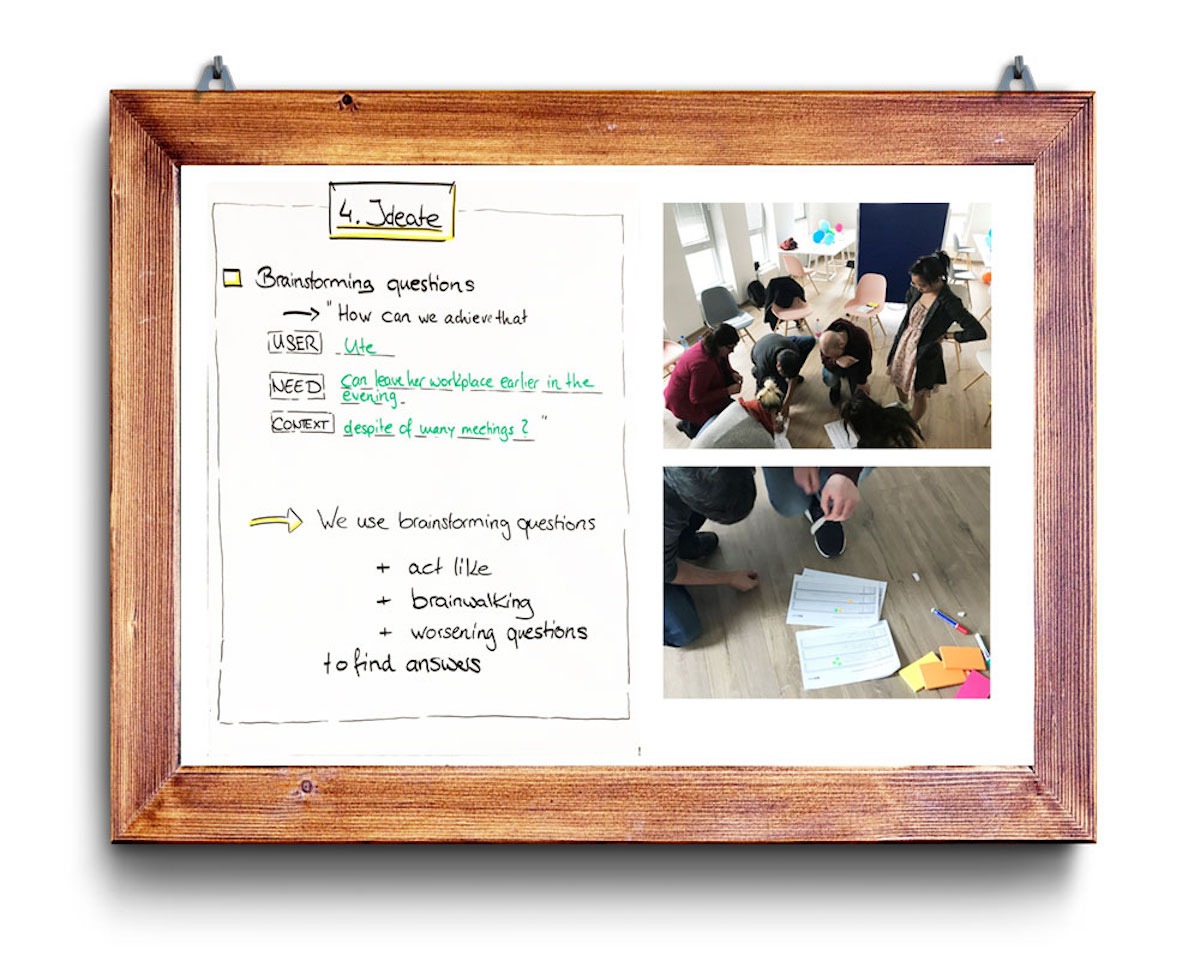
Depending on the challenge, different questions canapply. Here are some examples of how the questions can be asked:
The School of Stanford University defined six phases for the Design Thinking Process, which make a process successful. Conduct the Design Thinking Workshop along these six phases and in an iterative way.
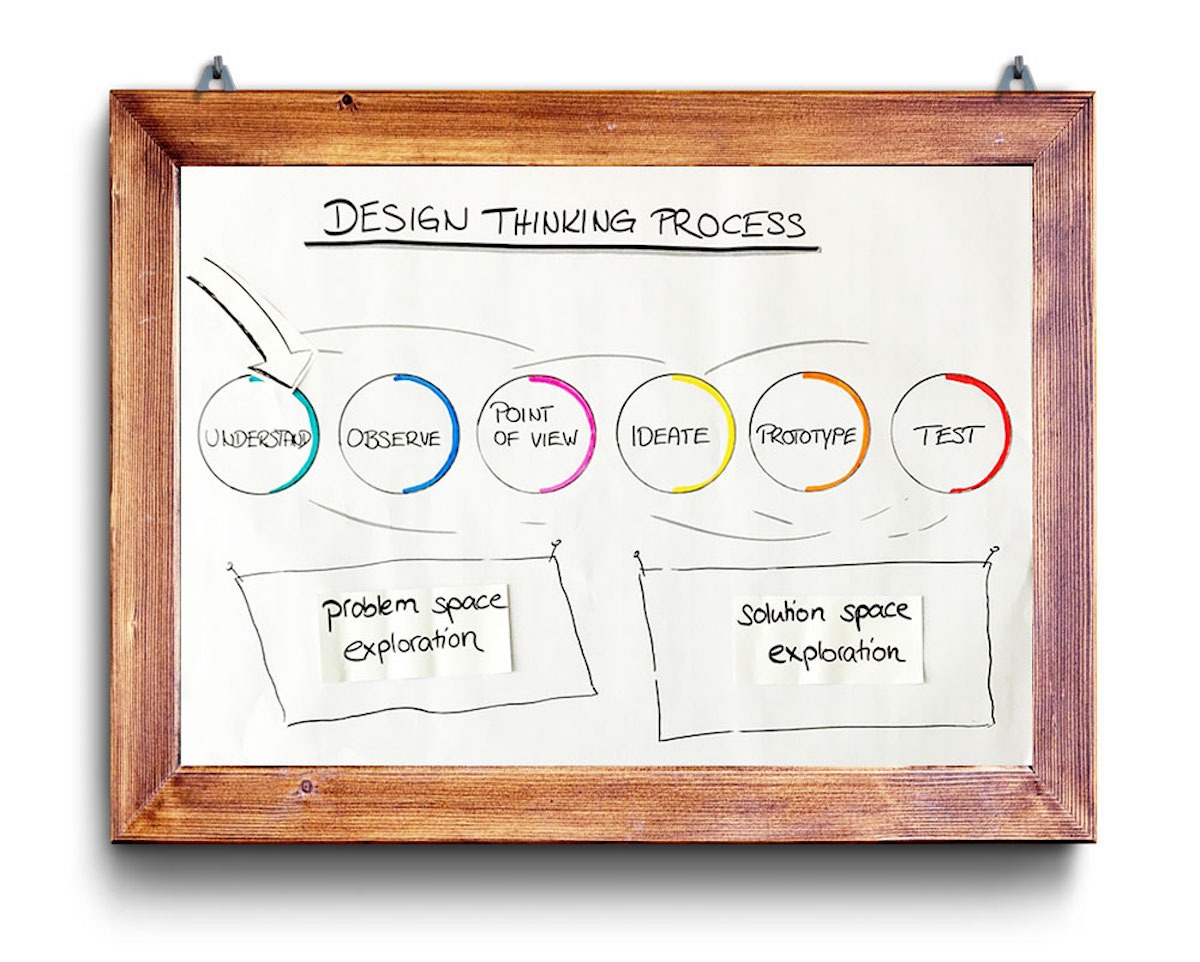
The first step is to understand what is at stake and what there should be a result for.In the context of a semantic analysis, the problem is first analysed and understood in detail. The easiest way to do this is to discuss the problem or issue deeply. The team shares its experiences and pursues the purpose. The content is explored, the stakeholders identified, and the challenge questioned so that everyone has a common understanding.
The second step is to correctly perceive the issues and problems from the user’s perspective.This is usually done by conducting interviews with different people within the organization, customers, affected persons, etc. This enables you to develop an empathy that helps you to ask the right questions. An effective method is to check whether one's own assumption is valid or not. For example, one of the questions could be: 'What's stopping you from using the product so far?'
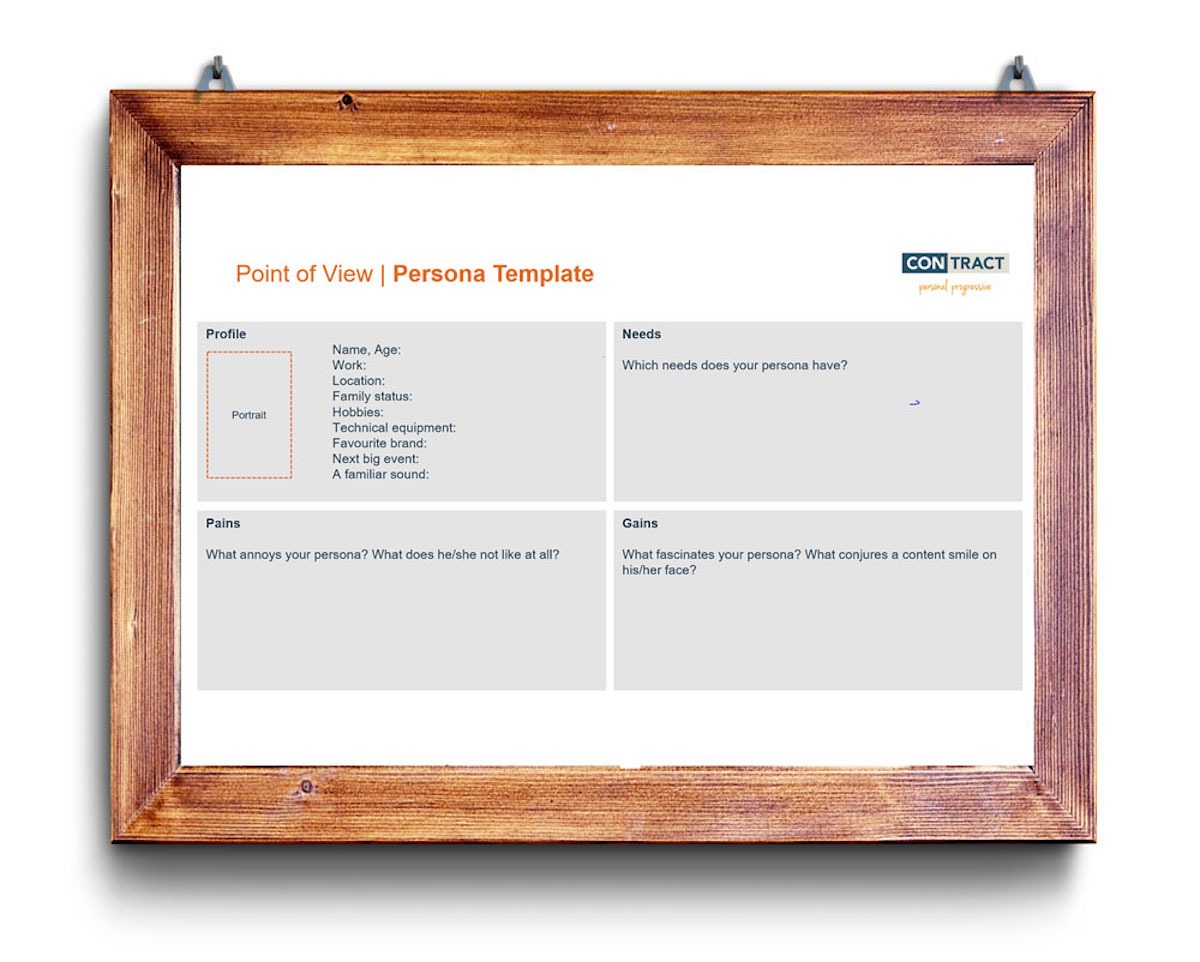
A combination of storytelling, clustering and persona forms the basis for this phase of the Design Thinking Process. Meaningful answers are created for different types of users (personas). These form the basis for the next step 'finding ideas'.
This phase is used to outline your ideas. Make a note of the main points by using the brainstorming questions to find answers, discard ideas and find new ones. Different variations of ideas often arise that lead to an overall idea. The crazier the ideas, the better!
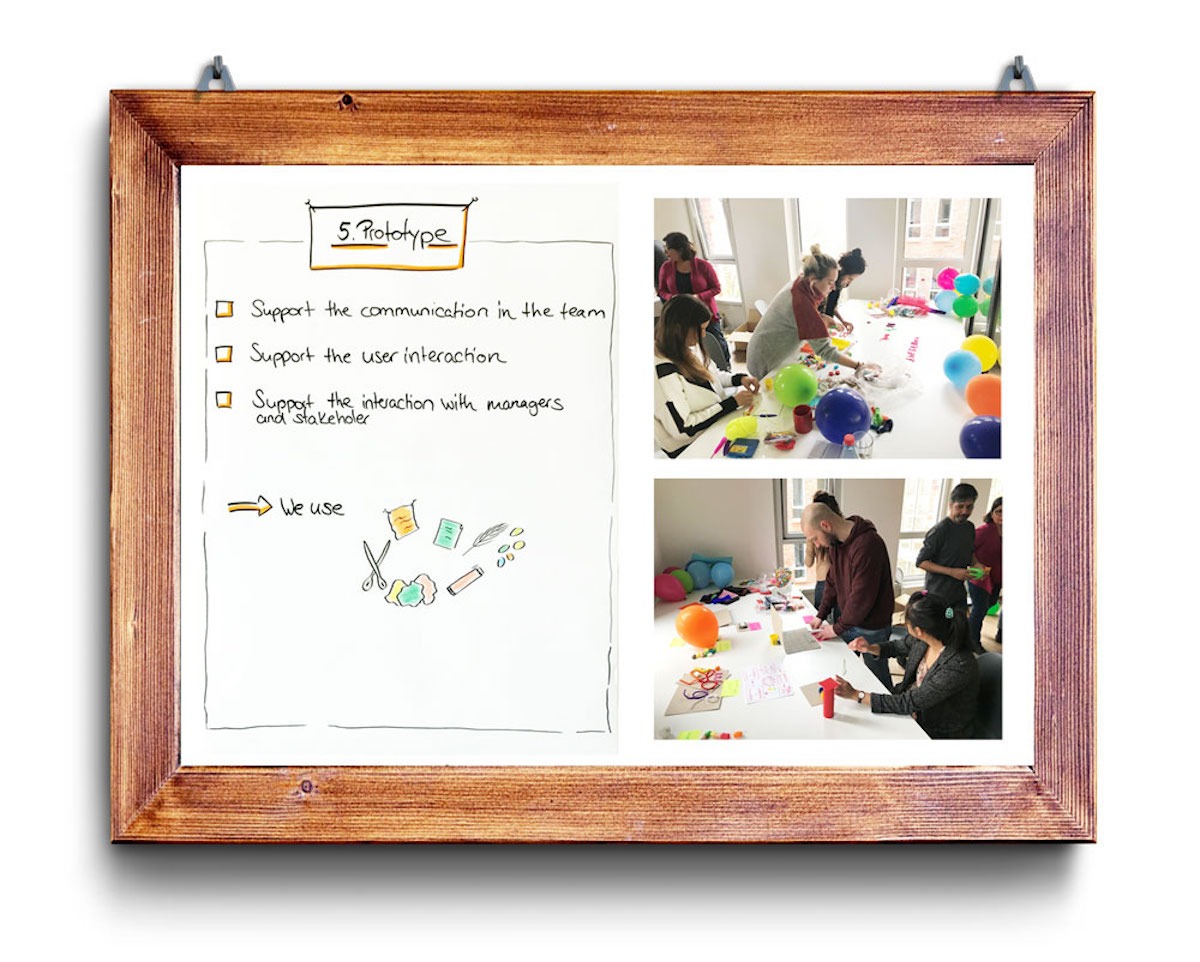
Based on the results of the previous phases, prototypes are developed in this step. Different materials are provided for this purpose. In this way you support the communication and interaction in the team significantly. Consult with different team members, such as managers and stakeholders.
Finally, share your results and use the feedback of the other workshop participants. Because that's what matters now. This results in new insights that are valuable. Helpful methods for this are e.g. test planning, presentation and feedback grid.
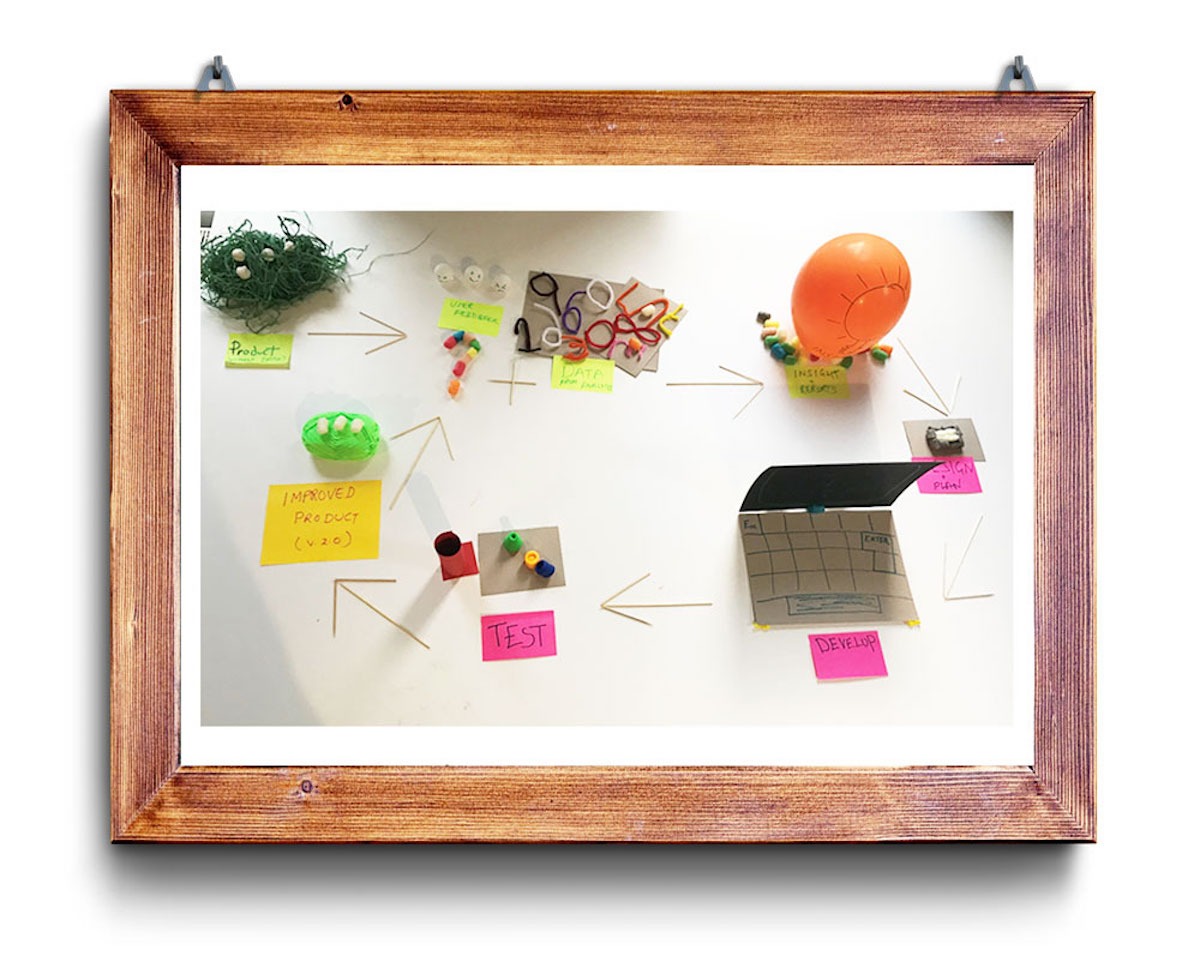
Ask your workshop participants what they liked about this process and what they would do differently next time. Encourage the participants to carry out a project or a situation in the future with this method.
Please contact us to explore what support we can provide or ask us questions.